Recovery, week by week
A 360 is a bigger recovery than a single-zone liposuction, because there is no comfortable position: front, sides and back are all treated. Here is what the timeline actually looks like.
The return-to-activity map
Every surgeon sets their own protocol and yours overrides anything here. These are typical windows, not instructions.
Typical windows across the first twelve weeks. Your surgeon’s protocol takes precedence over any general timeline.
Days 0–3: the hard part
Drainage is heavy and normal — tumescent fluid leaks from the incision sites for the first couple of days, and the volume routinely alarms people who were not warned. Expect to sleep propped up, to need help standing from a seated position, and to feel worse on day two than on day one. Walking short distances hourly while awake matters: it is the single most effective thing you can do to reduce clot risk.
Days 4–10: the swelling peak
Many patients look larger than they did before surgery during this window and quietly panic. This is fluid, not fat, and it is the most predictable phase of the entire recovery. Bruising migrates downward with gravity. Numbness across treated areas is expected and typically resolves over weeks to months.
Most surgeons clear desk work around day seven to ten, and clear flying in a similar window — with the caveat that a long flight this early requires aisle movement, hydration, and explicit clearance rather than an assumption.
Compression: two stages, not one
Compression is the part patients most often get wrong, usually by buying one garment and wearing it for eight weeks. As swelling resolves, a garment that fit at week one becomes loose and stops doing its job.
| Stage | Typical window | What it is | Why it matters |
|---|---|---|---|
| Stage 1 | Weeks 0–3 | Higher-compression garment, usually with hook or zip closure | Controls the initial fluid shift and supports the treated tissue planes |
| Stage 2 | Weeks 3–8 | Sized-down garment as swelling drops | Maintains even pressure once the first garment has gone slack |
| Foams / boards | Weeks 0–6 | Thin foam sheets worn under the garment | Distributes pressure evenly and reduces fibrosis and compression ridges |
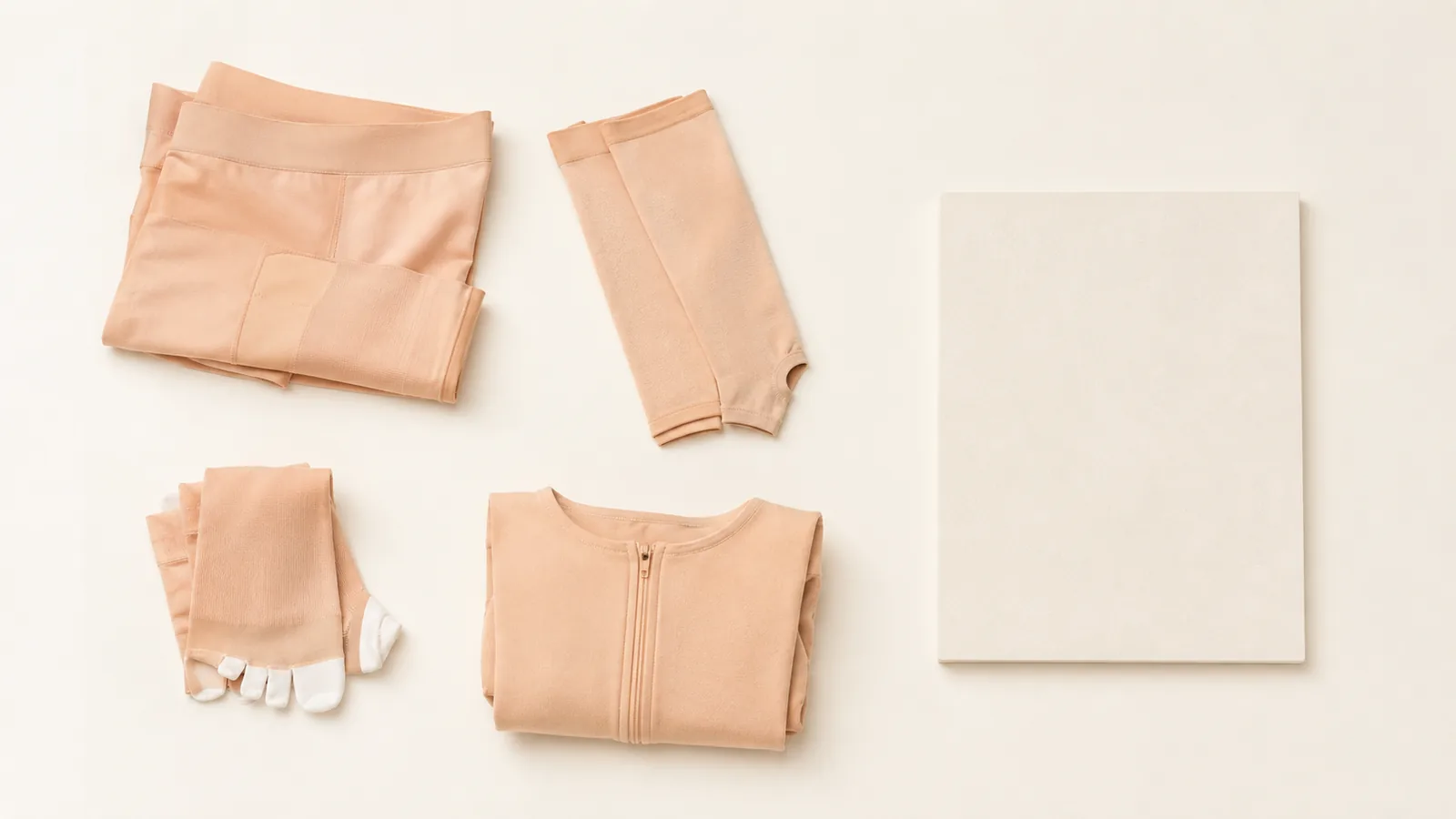
Stage 1 garment, second-stage piece, arm sleeve and foam board.
Lymphatic drainage massage
Manual lymphatic drainage is not a spa upsell after a 360 — it is how you reduce fluid retention and break down early fibrosis, particularly across the back, where fat is denser and firm nodules are more common. Typical protocols run frequently in the first week or two and then taper, with most patients completing somewhere between eight and fifteen sessions total. Timing of the first session varies by surgeon; some start within days, others wait. Follow the protocol you were given.
What is normal and what is not
Expected
- Heavy fluid drainage for 24–72 hours
- Looking bigger than pre-op during weeks one and two
- Numbness and patchy sensation across treated zones
- Firm, lumpy areas that soften over months
- Asymmetric swelling between left and right
- Bruising that migrates downward before fading
Call your surgeon
- Fever, spreading redness, or foul-smelling drainage
- Calf pain or swelling on one side
- Shortness of breath or chest pain — treat as an emergency
- Rapidly worsening pain rather than gradually improving pain
- Skin that turns dusky, dark, or blistered over a treated area
- Drainage that restarts heavily after having stopped
Do not judge your result at six weeks. Roughly 40 percent of the final contour is visible at that point, and the back and flanks lag behind the abdomen. Revision conversations belong at six to twelve months, once fibrosis has softened and swelling has fully resolved. Surgeons who agree to revise at week eight are usually operating on swelling.
If fat transfer was part of your plan, your restrictions are different and stricter — sitting and pressure limits apply on top of everything above, and current safety guidance places grafted fat in the subcutaneous layer only. Detailed coverage of that recovery lives on colombiabbl.co.