Lipo 360,
mapped.
Six zones, one operation, and a lot of marketing in between. Here is exactly what a 360 covers, what it costs in the US and abroad this year, and how long it actually takes to look like the after photo.
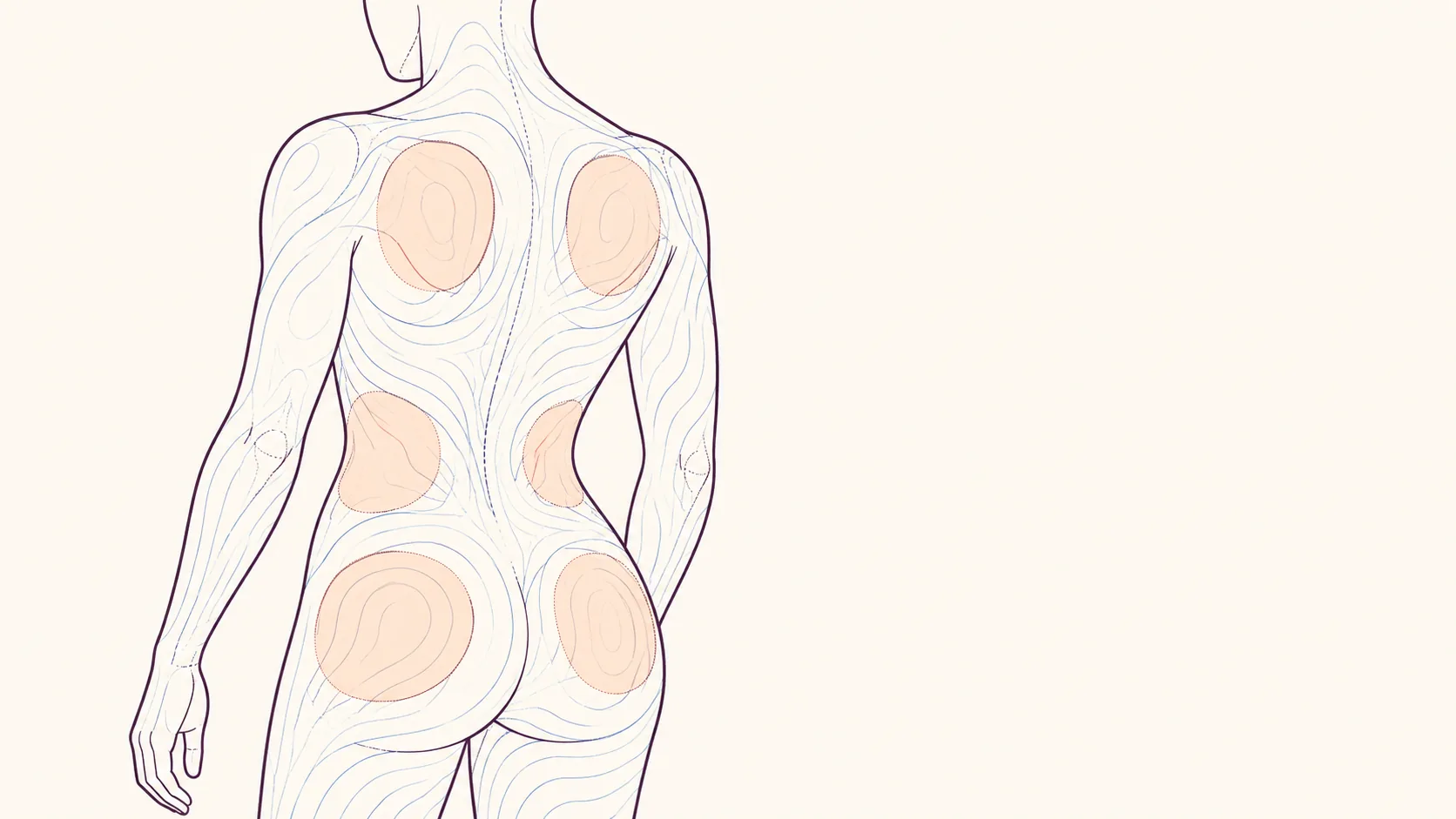
What “360” actually covers
The number refers to circumference, not a fixed package. Two surgeons can both sell you a “360” and treat different territory. Tap any zone to see what it is, what liposuction can realistically change there, and what it cannot.
Tap or click a highlighted zone · 7 regions mapped
Lower abdomen
The bra roll is the tell. It is the smallest zone by volume and the one most often quietly dropped from a discounted “360” package. Ask your surgeon to name every zone included, in writing, before you pay a deposit. A package that treats abdomen and flanks only is a lipo of four zones being sold as a lipo of six.
Four ways to remove the same fat
Device choice matters less than surgeon judgment, but it is not irrelevant — especially on the back, where fibrous fat resists a plain cannula. Here is what the terms in your quote mean and what each one is genuinely better at.
| Technique | How it works | Typical premium | Strongest case for it |
|---|---|---|---|
| Tumescent / traditional | Dilute anesthetic and epinephrine solution infiltrated first, fat aspirated mechanically | Baseline | Soft, non-fibrous fat; the reference standard everything else is measured against |
| Power-assisted (PAL) | Cannula tip oscillates rapidly, reducing the force the surgeon has to apply | $0–$500 | Large-volume cases and dense back fat; reduces surgeon fatigue across a long 360 |
| Ultrasound-assisted (VASER) | Ultrasonic energy emulsifies fat before aspiration, sparing surrounding tissue | $500–$1,500 | Fibrous zones, revision cases, and harvesting cleaner fat when transfer is planned |
| High-definition / etching | Selective superficial removal along muscle borders to expose underlying anatomy | $1,000–$3,000 | Lean, athletic patients wanting visible definition — and the least forgiving of surgeon inexperience |
Premiums are typical 2026 add-ons over a baseline 360 price. Ranges, not quotes.
Skin retraction is the variable nobody quotes you on. Every energy device markets some degree of skin tightening. The honest version: if your skin has good elasticity, most techniques give an acceptable result. If it does not, no cannula and no ultrasound will fix it — that conversation is about excision, not liposuction, and a surgeon who tells you otherwise is selling.
What a 360 costs in 2026
Ranges, not averages — because averages hide the thing you actually need to know, which is how wide the spread is. A US quote at the bottom of the domestic range can beat an international trip once travel is priced in.
The figure you will see quoted most often is the American Society of Plastic Surgeons number: an average surgeon’s fee of $4,711 for liposuction. ASPS states plainly that this excludes anesthesia, operating room and facility costs. It is a single-area surgeon fee, not a 360 price, and treating it as a budget is the most common costing mistake patients make. ASPS separately puts combined upper and lower abdominal liposuction at an average of $7,857 — and a 360 adds both flanks and the entire back on top of that.
Surgeon and facility fees, excluding flights, lodging and post-op massage — except Turkey, where the market quotes all-inclusive packages bundling hotel and transfers. Typical 2026 ranges compiled from published pricing. Not quotes.
| Line item | United States | Colombia | Notes |
|---|---|---|---|
| Surgeon & facility | $6,500–$15,000 | $3,000–$6,000 | The headline number in every quote |
| Anesthesia | Often bundled | Usually bundled | Confirm in writing — a common unbundling trick |
| Compression garments | $150–$400 | Often included | You will need two stages, not one |
| Lymphatic massage | $150–$300 / session | $30–$60 / session | Budget 8–15 sessions either way |
| Travel & lodging | Minimal | $1,200–$3,000 | Flights, 10–14 nights, a companion if you bring one |
| Revision risk | Local access | Return trip | The real cost difference nobody charts |
You will not look like the after photo for months
This is the single most common source of post-op panic, and it is entirely predictable. Fluid retention and swelling mask the contour for weeks. The shape you paid for arrives on a schedule — just not the one social media implies.
Approximate share of the final contour visible over time. Individual healing varies substantially; back and flank zones typically resolve more slowly than the abdomen.
Peak swelling
Many patients look and feel larger than before surgery. This is fluid, not fat. Drains may be in place. Compression is non-negotiable during this window.
The first honest look
Roughly 40 percent of the final contour. Firm areas and lumpiness are common and usually respond to massage. This is too early to judge the result.
Final contour
Fibrosis softens, residual swelling clears, and the shape settles. Any revision conversation belongs here — not at week six.
Who this works for — and who it doesn’t
Liposuction is a contouring operation. It removes subcutaneous fat, the layer you can pinch. It is not a weight-loss procedure and it does not treat the fat that sits behind your abdominal wall.
Good indicators
- Stable weight for at least three to six months
- Localized fat that resists diet and training
- Skin with reasonable elasticity and no significant overhang
- Non-smoker, or willing to stop well in advance
- Realistic goal: a better version of your own frame
- Able to take two to three weeks away from normal activity
Reasons to pause
- Using surgery as a substitute for weight loss
- Significant loose skin or a hanging abdominal apron
- Separated abdominal muscles after pregnancy
- Uncontrolled diabetes, clotting disorders, or active infection
- A goal photo of someone with a different skeletal frame
- Recent rapid weight loss that has not yet stabilized
A note on fat transfer. A 360 is frequently paired with fat grafting to the buttocks or hips. If that is on your plan, confirm one thing specifically: current safety guidance calls for fat to be placed in the subcutaneous layer only, never into or beneath the gluteal muscle. Ask your surgeon to state their placement plane and whether they use ultrasound guidance. Any hesitation on that question is an answer.
When the math favors leaving the country
A 360 abroad is not automatically the right call. It becomes the right call when the domestic quote sits at the top of the US range, you have flexible time, and you are willing to do the verification work rather than trusting a package price.
Verify the surgeon, not the clinic
Clinic branding travels well; credentials do not. In Colombia, plastic surgeons are verifiable through the national practitioner registry (ReTHUS) and membership of the Colombian Society of Plastic Surgery. Check the individual operating on you.
Ask where the surgery happens
Accreditation applies to facilities, not to brand names. Hospital-level accreditation is meaningful; an office suite advertising a hospital’s credentials is not the same thing. Ask for the name and address of the operating facility.
Price the whole trip, then compare
Surgeon fee, garments, massage, lodging for ten to fourteen nights, flights, and the cost of a return trip if a revision is needed. Compare that total against your domestic quote — not the headline figure against the headline figure.
Medellín is a major Colombian plastic-surgery market, but the size or reputation of the market is not a credential. The Colombian Society of Plastic Surgery held its 2026 national congress in Medellín and reports a nationwide membership of roughly 950 surgeons. Use that as context only; verify the individual surgeon in ReTHUS, check specialty context separately, and verify the actual operating facility in REPS.
Detailed country-side coverage lives on our sister properties: colombiabbl.co for contouring with fat transfer, colombiacosmeticsurgery.com for the full procedure set, and colombiamedical.co for logistics, verification and travel planning.
Lipo 360 in Medellín
Cost, quote structure, verification and recovery planning in one destination-specific guide.
Verify the people + place
Use ReTHUS, REPS and professional-society records for different parts of the verification job.
25-point quote checklist
Turn “all inclusive” into written yes/no line items before a deposit.
Already have a quote?
Put it through the Quote Checker before you compare on price. It turns the package into a list of named zones, included fees, missing details and real travel costs.
Check my quote →